Last updated: August 11, 2026
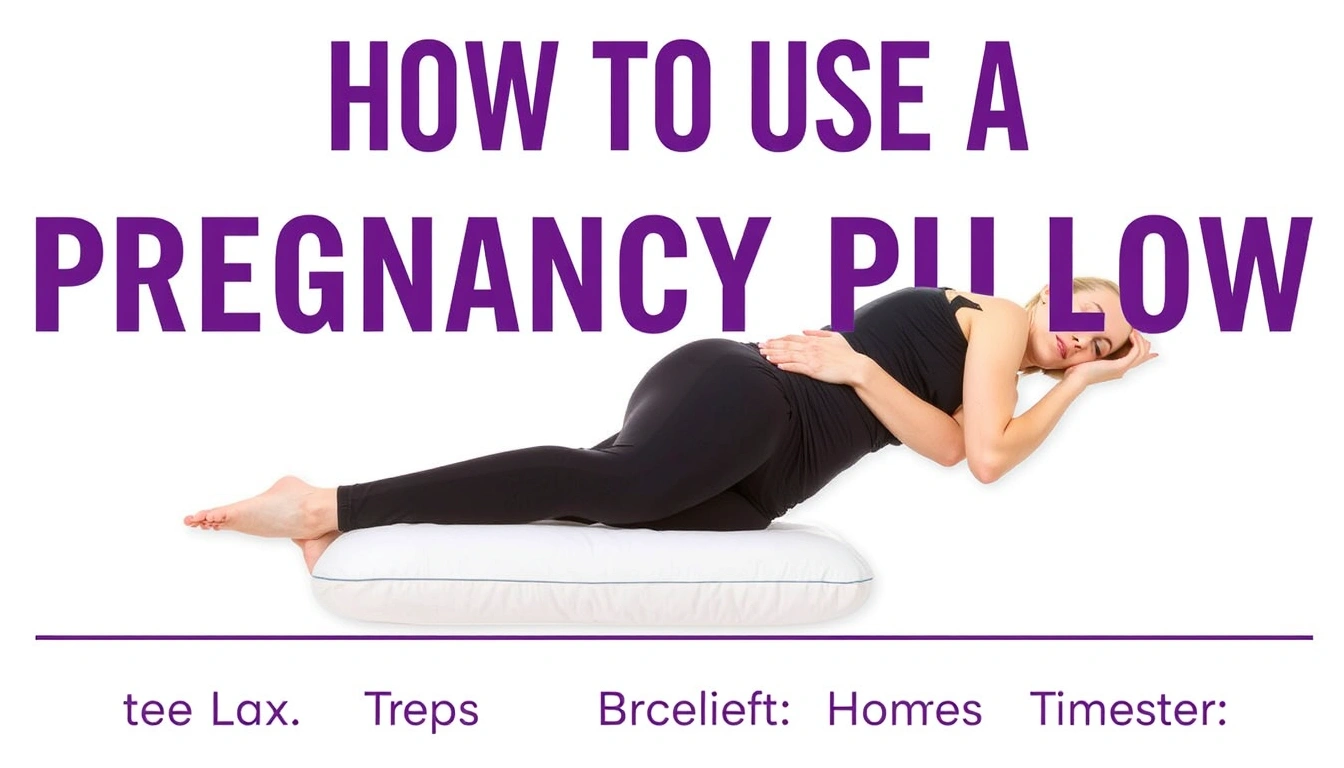
Quick Answer: How use pregnancy pillow: step-by-step setup each trimester usually comes down to 1 of 3 setups: a wedge in the first trimester, a body pillow or C-shape in the second trimester, and a U- or C-shaped pillow in the third trimester. Start with the smallest support that fixes the problem.
Key Facts / Key Takeaways
– Use a pregnancy pillow for comfort, support, and position control, not as a replacement for medical care.
– First trimester: 1 small wedge or 1 body pillow is often enough.
– Second trimester: 1 long pillow between the knees and under the bump can reduce hip and belly strain.
– Third trimester: 1 U- or C-shaped pillow can help with belly weight, back support, and turning.
– If pain is severe or comes with bleeding, contractions, shortness of breath, or swelling, consult a qualified health professional.
– Trusted guidance on pregnancy sleep positions is available from the ACOG and the NHS.
A pregnancy pillow should help you sleep, not stage a wrestling match in bed. The right setup for how use pregnancy pillow: step-by-step setup each trimester depends on where you are in pregnancy, what hurts, and whether you need belly support, back support, hip relief, or just a way to stop rolling onto your back. Honestly, that mix of symptoms can get messy fast. Because pregnancy sleep questions can overlap with real medical issues, I’d speak with a qualified health professional about your own situation if pain, numbness, shortness of breath, contractions, or sleep loss are becoming a problem.
What Actually Changes the Way You Use a Pregnancy Pillow
Already scrolling pillow options? Stop asking for one perfect answer. There isn’t one. The better question is: what hurts, and where?
Your main problem matters most. If hip pain leads the list, the pillow goes between the knees and ankles more than under the belly. If stomach pressure is the issue, the pillow has to support the bump from underneath. If your lower back aches, you usually need something behind the back to stop you from collapsing backward. And if you run hot at night, a giant U-shape may be more nuisance than help.
This is why a generic “just sleep on your left side” answer misses the point. Side sleeping is commonly recommended in pregnancy, but comfort and body mechanics matter too, and the right setup varies from person to person. The American College of Obstetricians and Gynecologists has guidance on sleep position in pregnancy, and the NHS also discusses safer sleep positioning during pregnancy. Simple, but not simplistic.
Here’s the short version: match the pillow to the job.
| Situation | Best Path | Why Other Options Fail |
|---|---|---|
| Early pregnancy, mild discomfort | 1 small wedge or 1 long body pillow | A huge pillow can feel bulky before you need that much support |
| Mid-pregnancy, hip and back pain | 1 long pillow between knees plus under belly | Pillow-only-at-the-head does nothing for pelvic strain |
| Late pregnancy, belly heaviness | 1 U- or C-shaped pillow with front support | A flat pillow often slips away from the bump |
| Back-sleeping habit | Side-sleep setup with back support behind you | A backless setup makes rolling backward easier |
| Hot sleeper | 1 smaller pillow or adjustable fill | Thick synthetic fill can trap heat |
Quick check: Name the main problem in one phrase—back pain, hip pain, belly weight, rolling over, or heat—and you’re ready to pick the right setup.
First Trimester: Use It for Comfort, Not Correction
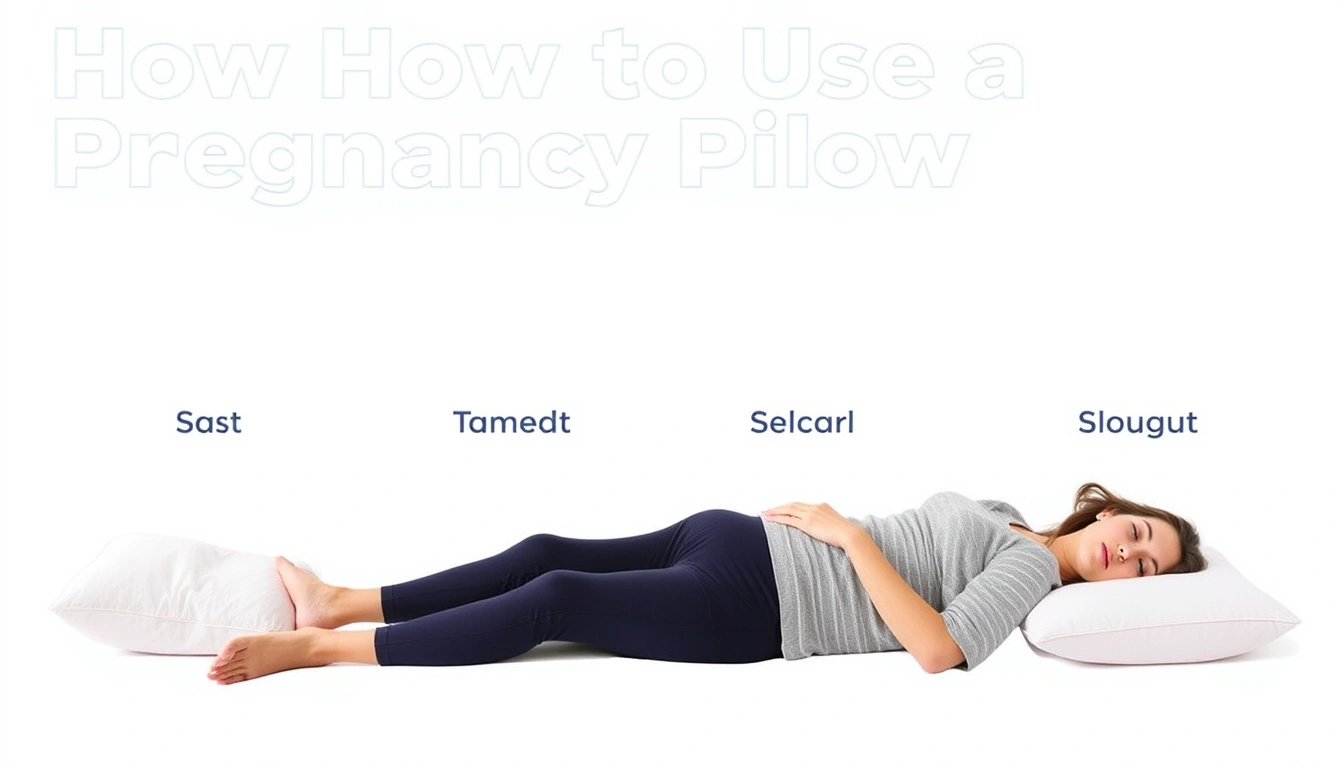
In the first trimester, I would not treat a pregnancy pillow like an overnight requirement. For many people, the belly is not large enough yet to need a giant U-shape. But if your sleep is already changing, a modest setup can help.
Nausea changes the equation. A slight upper-body incline may feel better than lying flat, but if lying flat worsens dizziness, shortness of breath, or chest discomfort, that is a medical conversation, not a pillow problem. Pelvic tenderness or low back soreness can also start early, and a small pillow between the knees can take pressure off the hips without taking over the bed.
A simple first-trimester setup:
- Start with your usual sleep position on your side, if that is comfortable.
- Place a small pillow or wedge between your knees so your top leg does not pull your pelvis forward.
- Keep the top knee and ankle supported; a pillow that only touches the knee often fails by morning.
- If your lower back feels unsupported, tuck a thin pillow or rolled blanket behind your waist.
- If the belly is already tender, slide a small wedge under the lower abdomen, not too high under the ribs.
- Try it for a few nights before changing three things at once, because too many adjustments make it hard to tell what helped.
The big mistake here is buying more support than you actually need. A giant pillow can crowd a small bed, trap heat, and create more tossing than it solves. A smaller, flexible pillow is usually the better starting point. Sometimes less is just less annoying.
Wake up on your back in early pregnancy? Don’t panic. The practical goal is to build a side-sleep setup that is easier to stay in, not to sleep perfectly every minute. If back sleeping is tied to symptoms like lightheadedness or discomfort, bring that up with a clinician.
Quick check: Early on, keep the pillow small. Start with support under the knees or belly instead of a full-body pillow.
Second Trimester: Build a Side-Sleep Setup That Stays Put
By the second trimester, a pregnancy pillow often starts earning its keep. The abdomen is larger, the hips may ache more, and side sleeping becomes harder to hold through the night. That shift is real.
With a U-shape, use the inside of the U as your sleep lane. Lie on your side with one arm under the top arm of the pillow and the other arm resting on the mattress or front curve, depending on comfort. With a C-shape, the long curve should support your back and the front curve should cradle your belly and top leg. With a straight body pillow, place it along the front of your body and hug it while also sliding part of it between your knees.
A setup that usually works well:
- Lie on your preferred side near the middle of the mattress, not jammed against the edge.
- Slide the pillow so the upper part supports your chest and upper belly without pressing on your ribs.
- Place the lower part between your knees and ankles to keep your hips stacked.
- Make sure your top leg is not hanging forward; that twist is a common source of morning hip pain.
- If there is a gap behind your waist, add a small pillow or towel there so your spine does not sag.
- Check that you can roll slightly without fully losing the support. If the pillow traps you in one position and you hate it, it is the wrong shape.
Trade-off time: size versus control. Larger U-shaped pillows give more enclosure, but they can take over the mattress. Smaller pillows give more freedom, but they may slide apart overnight. If you share a bed, this matters a lot. A massive pillow may be great for your body and awkward for your partner’s elbows. Ouch, basically.
If you are buying rather than using what you already have, choose shape based on your pain pattern. Belly support and back support point toward C- or U-shapes. Pure knee and hip relief can often be handled by a simpler body pillow or wedge.
Quick check: Wake up twisted at the hips or propped against your back? Then you likely need support between the knees plus something for the belly and spine.
Third Trimester: Fine-Tune for Belly Weight, Back Support, and Easy Turning
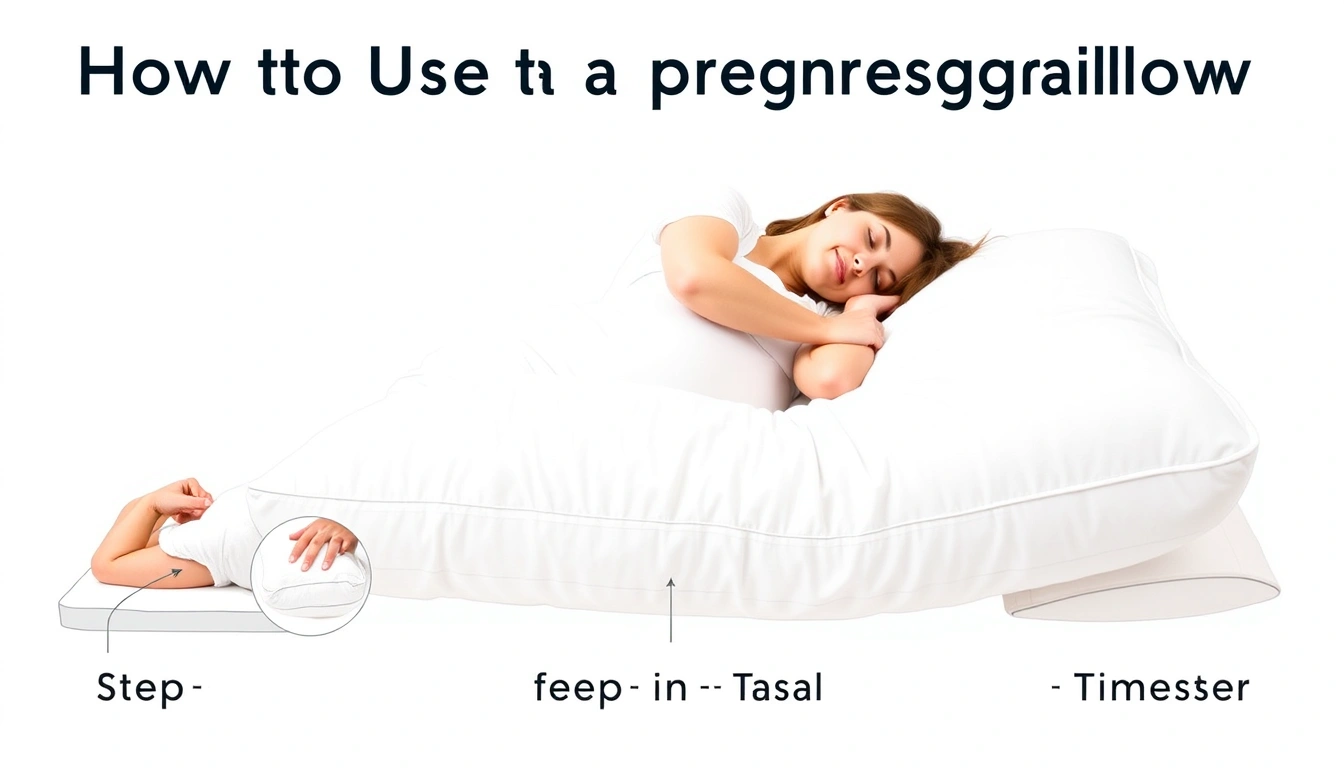
In the third trimester, the setup usually needs more precision, not just more stuffing. The belly feels heavier, turning over takes effort, and sleep can break down if the pillow fights your movements. A little detail goes a long way here.
Belly pull changes the priorities. If your belly feels like it is pulling you forward, then front support matters most. If your lower back aches, then back support matters more than a front pillow alone. If you wake often to switch sides, then your setup should let you pivot without rebuilding the whole bed each time.
A practical third-trimester setup with a U- or C-shaped pillow:
- Position the pillow before lying down so you do not have to drag it around after you settle.
- Lie on your side with your top shoulder slightly forward and your lower shoulder relaxed, not rolled hard underneath you.
- Place the front curve under the belly enough to lift, but not so high that it pushes the abdomen upward.
- Keep both knees and ankles supported to reduce pelvic torque.
- Use the back curve as a bumper if you tend to roll backward in sleep.
- If getting out of bed is awkward, leave one leg free enough that you can swing it down without unstacking the whole pillow setup.
I’d be blunt about the limit, too. A pregnancy pillow does not fix every type of pregnancy discomfort. If your pain is sharp, one-sided, accompanied by swelling, severe headache, bleeding, fluid leakage, contractions, or a sudden change in movement, that is not a pillow issue. Contact a qualified professional promptly.
For some third-trimester sleepers, a simpler setup wins. A wedge under the bump, a pillow between the knees, and a small back pillow may work better than a full U-shape. If a giant pillow makes you feel trapped or overheated, choose function over the “pregnancy pillow” label.
Quick check: Turning over is the main struggle? Then your pillow needs to support the belly and knees while still letting you pivot without a wrestling match.
How to Use Different Pregnancy Pillow Shapes Without Fighting Them
If you already own a pillow, the shape tells you how to set it up. The trick is not using it like generic bedding. Each shape solves a different problem.
A U-shaped pillow uses the open center as your sleeping space and lets both sides support you. One side can cradle the front of your body, and the other can act as a back barrier. This is a strong fit if you change sides often, but it can feel large in a narrow bed.
A C-shaped pillow usually puts the long back curve behind you while the front curve supports the belly and knees. This shape is handy when you want strong back support without the bulk of two separate pillows.
A wedge pillow can go under the belly, behind the back, or under the hips depending on the pain point. A wedge is the most portable option, but it usually solves only one problem at a time.
A straight body pillow is simple: hug the top half and tuck the lower half between your knees. This is the simplest all-purpose option for many sleepers, though it may slip unless you arrange it carefully.
A J-shaped pillow is a hybrid: one side for body support, the curved end for head or neck positioning, and the long section for knees or belly. The exact orientation depends on the model, so the main job is to keep the pressure off your hips and lower back.
One rule covers most of it: the more places you hurt, the more likely a C- or U-shape will help. The more specific the discomfort, the more likely a wedge or body pillow is enough.
Quick check: Keep rearranging the same pillow and still hurting in the same place? The shape may be wrong, not your technique.
Edge Cases: When the Normal Advice Breaks Down
If one of these sounds familiar, standard pillow advice may not fit.
- You sleep hot: what changes is heat buildup; what to do instead is choose a smaller pillow, a breathable cover, or a wedge plus knee pillow rather than a full thick body pillow.
- You share a narrow bed: what changes is space; what to do instead is use a compact wedge or a single straight body pillow so you do not block half the mattress.
- You have reflux or nausea at night: what changes is upper-body comfort; what to do instead is ask a clinician about safe positioning and use pillows to support a gentle incline if advised.
- You have sciatica or one-sided hip pain: what changes is pressure on one side; what to do instead is stack support from knees to ankles and add a small lumbar cushion behind the waist.
- You have twins or a larger abdomen than expected for dates: what changes is load and stability; what to do instead is look for stronger belly support and reassess fit often, because a pillow that was fine last month may stop working fast.
- You wake with numb arms or shoulder pain: what changes is upper-body alignment; what to do instead is reduce how much of your weight is draped on the pillow and keep the top arm supported on a separate cushion if needed.
If any of these problems come with severe pain, breathing trouble, bleeding, contractions, or sudden swelling, stop treating it as a sleep setup issue and speak with a qualified health professional. The ACOG and NHS both advise checking concerning pregnancy symptoms with a clinician. No heroics.
Quick check: If the pillow feels wrong for reasons beyond simple comfort, you probably need a different shape or a medical check-in, not more forceful pillow arranging.
A Simple Setup Routine You Can Repeat Night After Night
If you want the shortest possible working method, use this. It is the version I’d start with if I needed to explain it to someone in two minutes.
- Pick the side you can tolerate best tonight.
- Put the pillow where the pain is: between knees for hips, under the bump for belly, behind the back for rolling support.
- Keep ankles aligned as well as knees.
- Relax your top shoulder forward so your spine does not twist.
- Adjust one piece at a time, then leave it alone for a few nights.
If the pillow is doing its job, you should feel less strain, fewer position changes, or less pressure when you first lie down. If you wake sore in the same place every morning, the setup is still off.
For more conservative guidance on sleep and pregnancy positioning, I’d look to reputable health sources such as the American College of Obstetricians and Gynecologists and the NHS. That is the safer bet.
Quick check: Want a no-fuss routine? Use the pillow to support the exact body part causing the problem, then simplify.
FAQ
Should I sleep on my left side every night?
Not necessarily. Side sleeping is commonly recommended in pregnancy, but comfort and how your body responds matter too. If one side feels better than the other, that usually guides the setup more than a rigid rule. If you have a medical condition that affects sleep or circulation,